
PA DOC Potter Release Path
No state correctional institution was found physically in Potter County. A defendant committed to Pennsylvania DOC can be classified to any suitable SCI, and no official source supports promising one fixed receiving prison. This facility page therefore covers the statewide corrections system, not a local prison. Placement can change while the person remains in state custody, and an SCI-to-SCI move is a transfer rather than a release.
When state imprisonment ends through parole, the person returns to the community under PA DOC field supervision. The Pennsylvania Parole Board makes the release decision, while DOC performs field supervision and maintains the public inmate and parolee locator. Final discharge or maximum expiration ends the relevant sentence obligation and may require a DOC sentence-status record. A Board grant alone is not proof that the gate release occurred.
| Stage | Responsible source | What it establishes |
|---|---|---|
| State commitment | Sentencing docket and DOC intake | Authority for state custody |
| Current SCI placement | PA DOC inmate locator | Current state location supplied by DOC |
| Parole decision | Parole Board Action | Grant, refusal, or later action |
| Physical parole release | Parolee locator “Release Date” or DOC record | Actual release from prison to supervision |
| Final discharge | DOC sentence-status or discharge record | End of the state sentence obligation |
Search PA DOC Potter Releases
The official PA DOC locator guide says the public application covers state-sentenced inmates and people supervised on state parole. It excludes county-facility detainees and out-of-state prisoners and updates daily. A Potter County Jail release does not belong in this tool unless a state commitment or state parole status also exists.
- Open the statewide inmate and parolee locator and choose the inmate or parolee path that matches the likely status.
- Search by inmate or parole number when known. Otherwise use last name and first name.
- Compare the date of birth, committing county, location, and official photograph. Do not accept a name-only match.
- On a parolee record, preserve the exact “Release Date” label and check the last update.
- If no result appears, test spelling and status, then use DOC records for an older final discharge.
The public locator does not expose a projected, tentative, minimum, or maximum date field. A current-inmate result cannot be turned into a promised future release date. The parolee-side “Release Date” records a release that occurred and begins parole supervision. It is not the same as final sentence discharge.
The live Pennsylvania inmate and parolee locator is the correct statewide search interface.
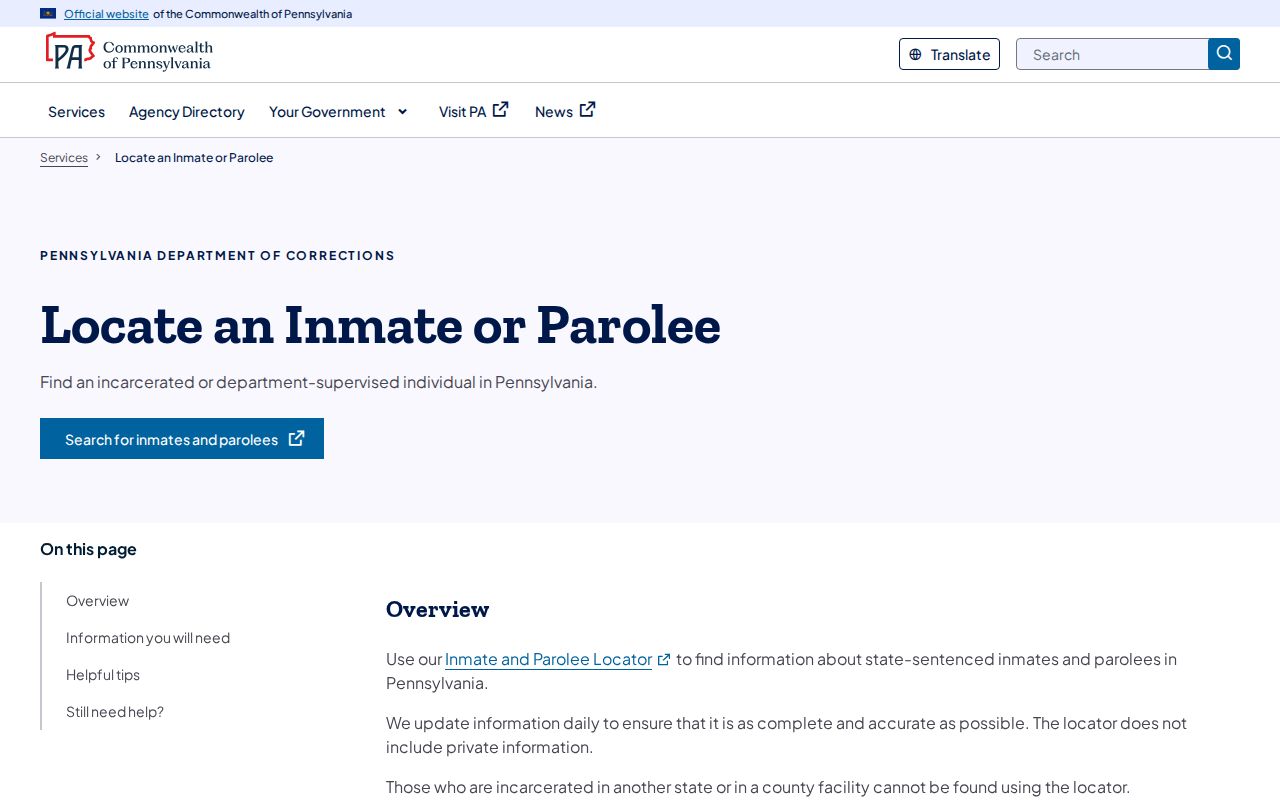
This official entry point explains the state population covered and keeps county-only Potter Jail detainees outside the locator's scope.
PA DOC Release Search Fields
Search and result fields serve different roles. An inmate or parole number is the strongest public search key. Name fields can produce several people and require comparison. The committing county helps tie a result to Potter County, but a person can have matters in more than one jurisdiction. The official photograph and photo date aid identity checking without proving current custody on their own.
| Field | Use | Limit |
|---|---|---|
| Inmate or parole number | Narrows the state record | Must match the correct person |
| First and last name | Starts a public search | Name alone is not enough |
| Committing county | Connects the state case to Potter County | Other cases may also exist |
| Location | Shows supplied current placement or supervision context | Can change after an update |
| Release Date | Shows parole release occurred | Does not show final discharge |
| Photo and last update | Support identity and timing checks | Do not replace a certified record |
A no-result has several possible meanings. The person may have had county-only custody, reached final discharge, entered another jurisdiction, been searched under the wrong spelling, or fallen outside the live locator's population. Absence cannot prove release, continued custody, or that no state record existed.
Request PA DOC Release Records
For historical or formal confirmation, submit a Right-to-Know Law request to the DOC Office of Chief Counsel, 1920 Technology Parkway, Mechanicsburg, PA 17050. The office lists 717-728-7763, fax 717-728-0312, and RA-docrighttoknow@pa.gov. Business hours in department policy are 8:30 a.m. to 5 p.m. Include the DOC number whenever possible and describe existing records rather than asking the department to calculate or explain a new answer.
- Identify the person and DOC number, plus an approximate Potter County sentence or release period.
- Ask for the actual release date and whether the release was to parole or final discharge.
- Request the maximum or discharge date and public sentence-status fields when relevant.
- Ask for electronic delivery and segregable public portions.
- Compare the response with the sentencing docket and any final Board Actions.
The PA DOC Right-to-Know page provides the official request route.
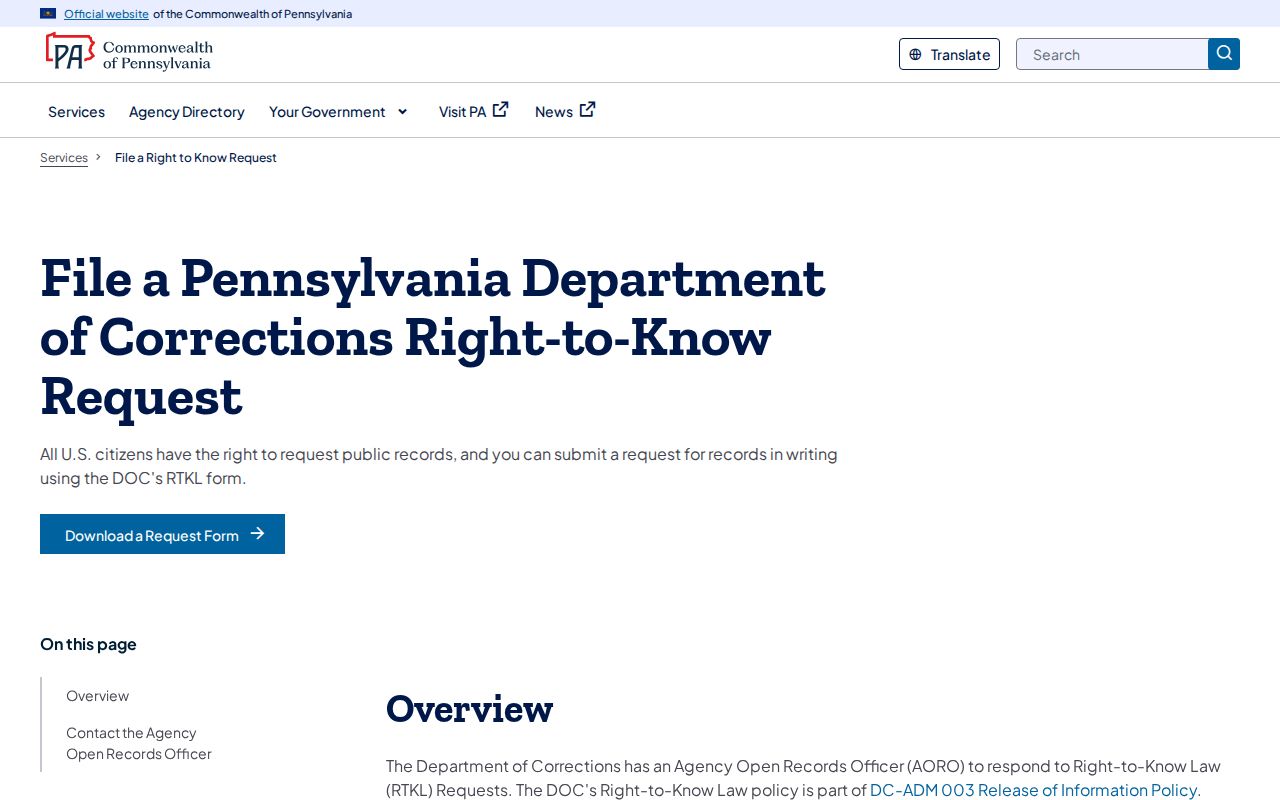
A records response is better suited to an older final discharge than a live locator designed around current inmates and supervised parolees.
Potter Parole Decision Versus Release
The Pennsylvania Parole Board decides state parole. A Board Action, once called a green sheet and also called a Board Decision, records a grant, refusal, reasons, and possible conditions. Requesting that record can explain the decision. It does not establish the physical exit because a home plan, detainer, processing step, or later action can delay or stop implementation.
DOC says an in-state home-plan investigation typically takes up to 45 days. Approval remains valid for a stated period, but approval does not prove release. Confirm implementation through the parolee locator's “Release Date” or a DOC record. A minimum date is ordinarily an eligibility point under Pennsylvania's indeterminate sentence structure. It is not a guaranteed release date.
- Minimum date
- The ordinary first point for parole consideration, subject to the sentence and law.
- Board Action
- The official parole decision, which can precede actual release.
- Release Date
- The DOC parolee field for a release that occurred.
- Maximum date
- The sentence ceiling, subject to lawful recalculation and other sentences.
- Discharge
- The end of the state sentence or supervision obligation in the agency record.
Potter State Release Conflicts
Conflicting sources often describe different stages or custody systems. The Potter County Jail can correctly record a release to Pennsylvania DOC while the state locator correctly shows the person as an inmate. The first source describes the county exit; the second describes continuing state custody. Likewise, a Board Action date, minimum date, gate release date, and database update date can all differ without any source being wrong.
Resolve a conflict by checking the source agency, exact field label, access time, person identifiers, destination, and custody system. Compare the state result with the UJS Potter County docket, and use the Potter County Clerk of Courts route when the public case record needs clarification. A defensible note might say that Potter County custody ended by transfer to DOC and the state locator later showed an SCI. It should not say the person returned to the community. For a parole result, state that the DOC record labels the date “Release Date” and that supervision continues.
Preserve the agency's own date label. Eligibility, a Board grant, actual parole release, and final discharge are four different facts.
PA DOC Potter Sentence Dates
Pennsylvania uses an indeterminate sentencing structure. Under 42 Pa.C.S. §9756, a total-confinement sentence has a maximum and generally a minimum no greater than half the maximum. The minimum is ordinarily the first point for parole consideration. The maximum is the sentence ceiling, subject to lawful credit, recalculation, and other sentences. The Parole Board ordinarily cannot grant parole before the minimum under 61 Pa.C.S. §6137, and reaching that date does not compel release.
A broad claim that Pennsylvania inmates must serve 85 percent of the maximum is wrong. The Board expressly rejects that rule. The Recidivism Risk Reduction Incentive, or RRRI, is a separate form of earlier eligibility for a person whom the sentencing court finds qualified. Under 61 Pa.C.S. §§4503 and 4505, exclusions apply, and the RRRI minimum uses statutory fractions tied to the ordinary minimum. It is not universal good time and does not guarantee release.
For a Potter County state sentence, start with the sentencing order, effective date, and credit for time served. Apply RRRI only if the order confirms eligibility. Then check consecutive terms, detainers, Board decisions, home-plan status, recalculation, misconduct, violations, and new cases. These facts are not combined in one public projected-date field, so any future-date calculation remains an estimate until DOC confirms the actual record.